
Flag Football Plays for 8 to 10 Year Olds (5v5 Youth Playbook)
Something changes around age 8. The kids can suddenly handle a real play. They know where to line up, they know which side of the field is theirs, and most of them know the basic routes. This is the age where a playbook stops being a wish and starts being a tool.
The trick is keeping it small. USA Football's development model adds complexity one step at a time for a reason, and a 9 year old with six plays they know cold will beat a 9 year old with twenty plays they half-remember. So the goal at 8 to 10 is not a thick playbook. It is a handful of plays built on routes the kids actually know, with a quarterback who has a first option and a safety net.
Here is how to build that, where the plays come from, and how it should grow between age 8 and age 10.
First, the route tree
Before plays come routes. By this age, most players who have played a season are familiar with the core routes from the route tree, know where to stand, and with practice know where to be when the quarterback throws. The routes worth drilling are the simple ones: the slant, the out, the hitch, the post, the corner, and the fly or fade. Almost every play below is just two or three of those run together.
Spend real practice time on the route tree itself. A walk-through of each route, then run them at speed. Plays are easy once the routes are automatic.
Two formations are plenty
Live in two looks. A spread formation gives you width and space. A bunch formation, where receivers start clustered and break out, clumps the defense and reliably causes confusion, sometimes even collisions between defenders. Those two cover most of what you need at this age. Save the rest for older teams, and keep the very simple stuff for your youngest players.
The plays
These plays come from the NFL FLAG Playbook, the most widely used youth playbook in the country, and from common 5v5 coaching staples. They work because they scheme a receiver open instead of hoping one wins.
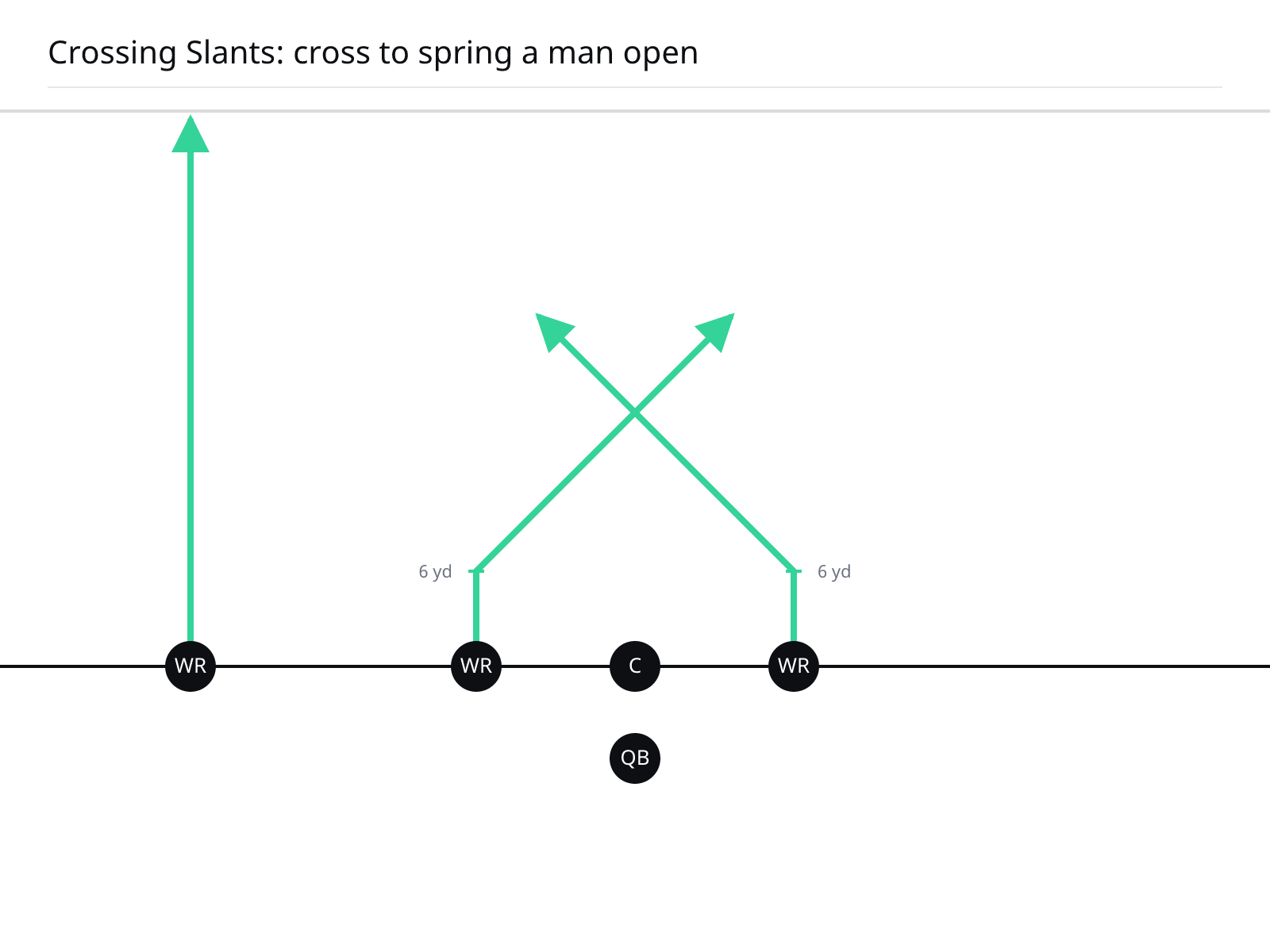
Crossing slants (the confusion play). Two receivers run quick slants toward the middle and cross paths. When defenders are playing man, the crossing routes create a natural pick and someone comes open underneath. This is the most reliable concept at this age.
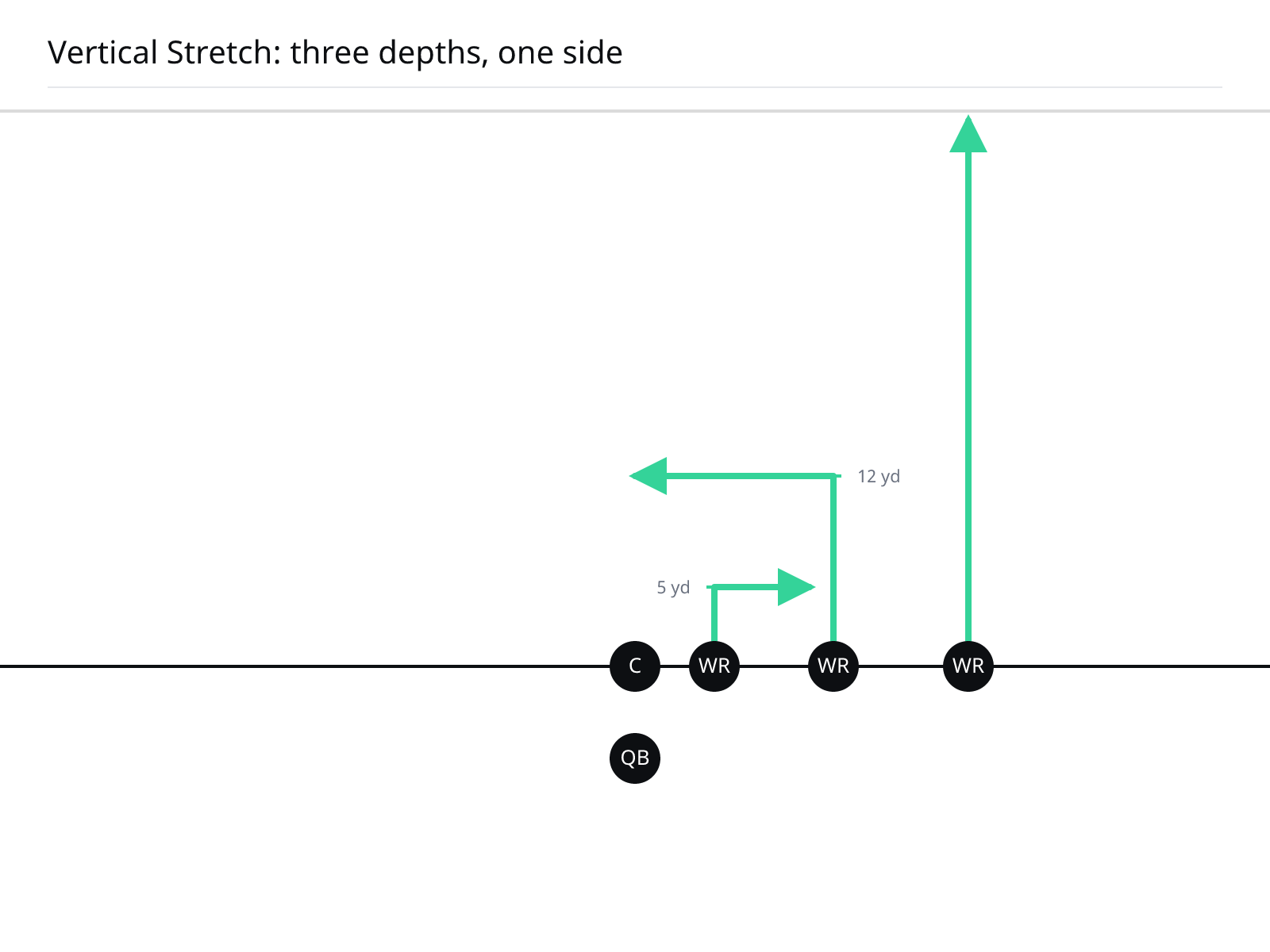
Vertical stretch (short, middle, deep). Three receivers attack at three depths on the same side. One runs a short out, one a medium dig, one a fly. The defense cannot cover all three levels, and the quarterback throws to whichever one the defender leaves open.
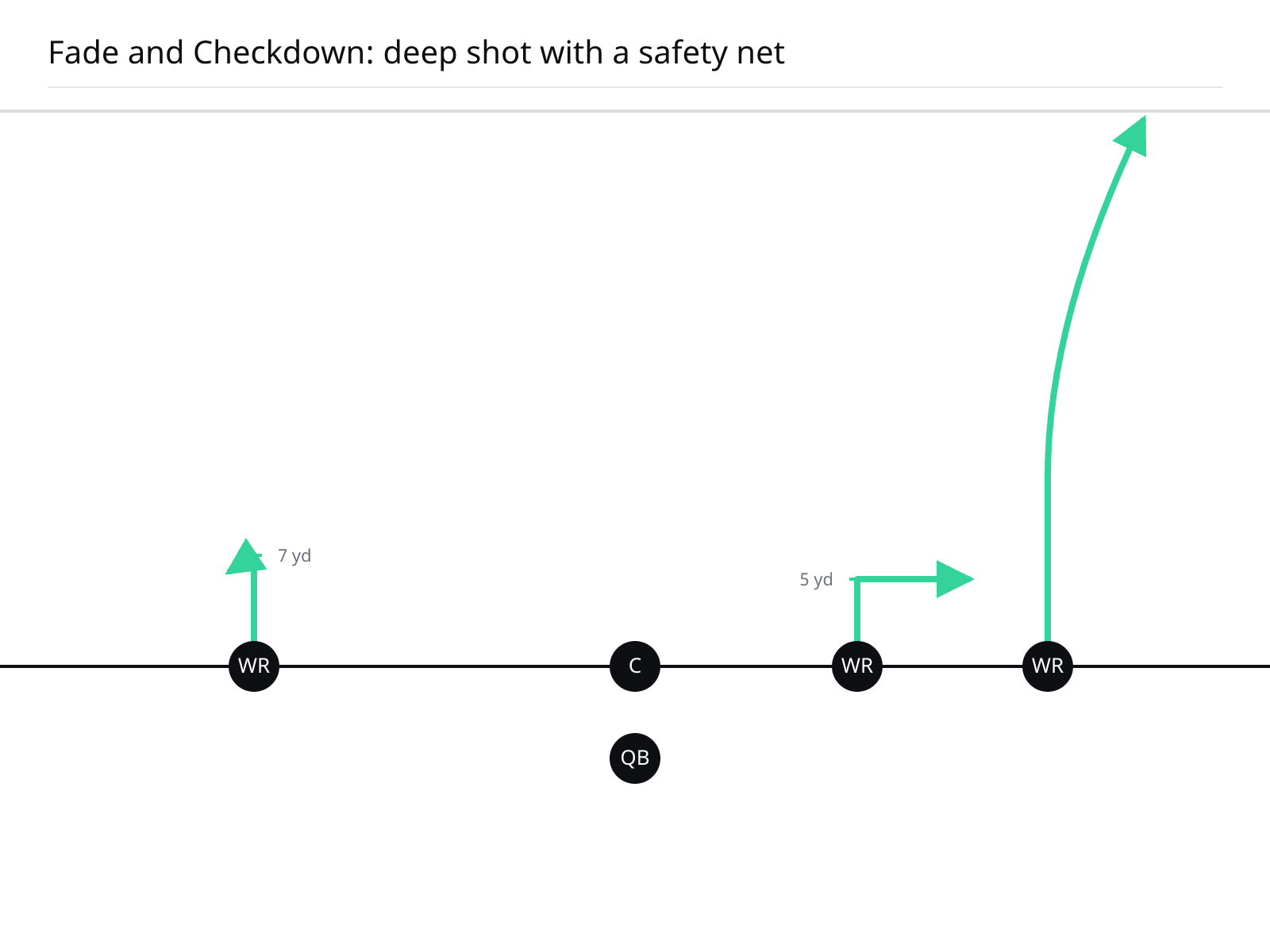
The fade with a checkdown. One receiver runs a fade up the sideline as the deep shot. A second runs a quick out as the safety net. This is the play that teaches your quarterback the single most important habit at this age: if the first option is covered, throw the easy one.
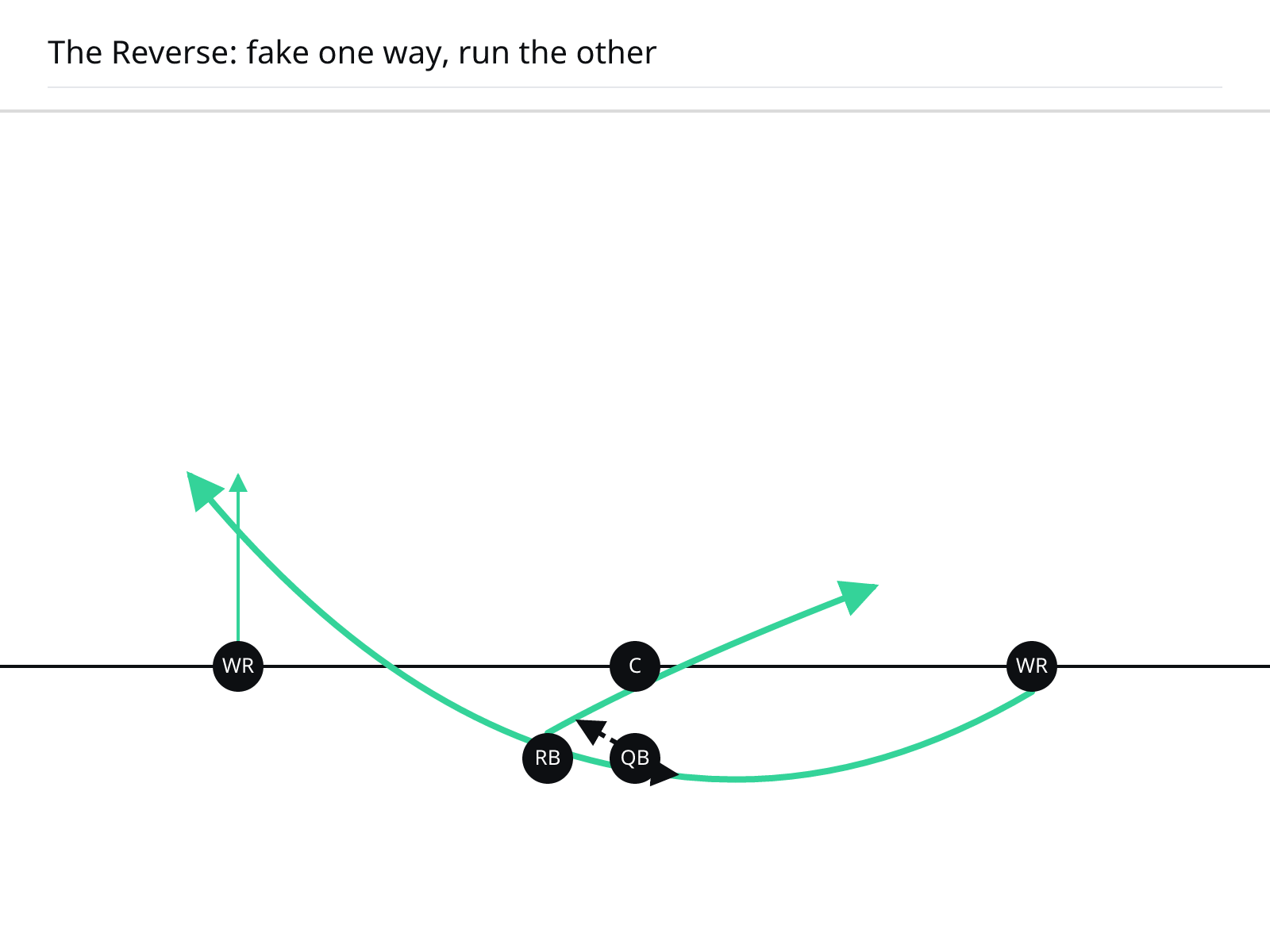
The Reverse (misdirection). The quarterback fakes a handoff one way, then hands to a receiver coming back the other way. It runs wide to get around a defense that crashes inside, and it buys your offense space.
How it grows from 8 to 10
The tier is not flat. There is a real jump inside it.
At age 8, keep it to the route tree and simple misdirection. The staple plays here are things like a crossbuck that moves the defense one way and the ball the other, a bunch play that floods targets across the field, and a quick reverse for short yardage.
By age 10, kids who have played a season or two are ready for deep routes and layered misdirection. This is where you add a vertical play that stretches the defense with short, intermediate, and deep options at once, double moves like a post that breaks back to a slant, and trickier misdirection like a double reverse. An I-formation look that makes defenders guess man or zone starts to work here too.
So if you coach the full 8 to 10 band, run the simpler version with your youngest and layer the deep routes and double moves in as they are ready.
Teach one read, not five
Your quarterback does not need to read a defense yet. They need a primary target and a checkdown. Tell them who to look at first, and tell them where to dump it if that is covered. One read, one safety net. That is the whole quarterback job at 8 to 10, and the fade-with-checkdown play above is the best way to drill it.
Defense stays in man
Keep flag pulling as its own drilled skill, and play man coverage where everyone guards a person. The older end of this tier can start to dabble in a basic zone, but man is plenty. Most points at this age come from a defender losing track of a crossing receiver, so teaching kids to stay with their man covers most of it.
What to track now
This is the age where stats start to mean something. A real passing game exists, so completion percentage, targets, and passing yards actually tell you something. You can see whether your quarterback is finding open receivers or forcing it, and which kids get open versus which never get the ball.
StatHawk logs all of that with a tap from the sideline, then turns it into a clean box score you can share with parents. Tracking targets is especially useful at this age, because it shows you at a glance if you are spreading the ball around or leaning on one kid. The core features are free.
Keep the playbook to six plays the team knows perfectly. Drill the route tree. Teach one read and a checkdown. That is a complete 8 to 10 offense.
Download StatHawk free on the App Store →
Sources: USA Football Football Development Model (fdm.usafootball.com); NFL FLAG 5v5 Playbook (nflflag.com); MOJO Sports, "10 Best Flag Football Plays for 8-Year-Olds" and "10 Best Flag Football Plays for 10-Year-Olds"; Football Advantage, "5 on 5 Flag Football Plays."
Track your team with StatHawk
StatHawk is the free iOS app built for flag football coaches. Score games live, build full box scores, and share a public GameView link that parents and fans can open in a browser without an account or app download. Want deeper Insights and AI Season Summaries? See StatHawk Pro. Coaches can download StatHawk free on the App Store.