
Flag Football Plays for 5 to 7 Year Olds (Easy Beginner Plays)
Here is the truth most playbooks will not tell you. At 5 to 7 years old, your players do not need an offense. They need to know where to stand and where to run. That is the whole job.
USA Football's Football Development Model puts these ages in the very first stages of the sport, where the focus is fundamental movement and basic skills before any complexity gets added. Coaches who run youth leagues say the same thing in plainer language. For this age group the goal is not to install an offense. It is to get every player comfortable running, catching, and pulling flags. Completing a pass is genuinely hard at this age. Many 5 and 6 year olds even use a side snap because the regular snap is tough for small hands.
So the right playbook here is tiny. Four or five plays, run from one formation, named so a 6 year old can remember them. Here is a set that works, where the plays come from, and how to teach them so the kids actually end up in the right place.
Start from one formation
Pick one formation and live in it. A spread look is the easiest place to start. Two receivers split out wide on the line, the running back next to the quarterback, and everyone has room to move. Coaches who run NFL Flag leagues lean on exactly this setup for beginners because it spaces the kids out and stops them from clumping into one pile.
Run everything below from that same formation. Changing formations every play is how you lose a 6 year old.
The plays
Two things carry this age group: a couple of handoffs and a couple of simple routes with names kids remember. These specific plays come from youth flag coaches Art Moreno of Blue Chip Youth Sports, who runs more than a dozen NFL Flag leagues, and Damon Blechen of Next Level Flag Football.
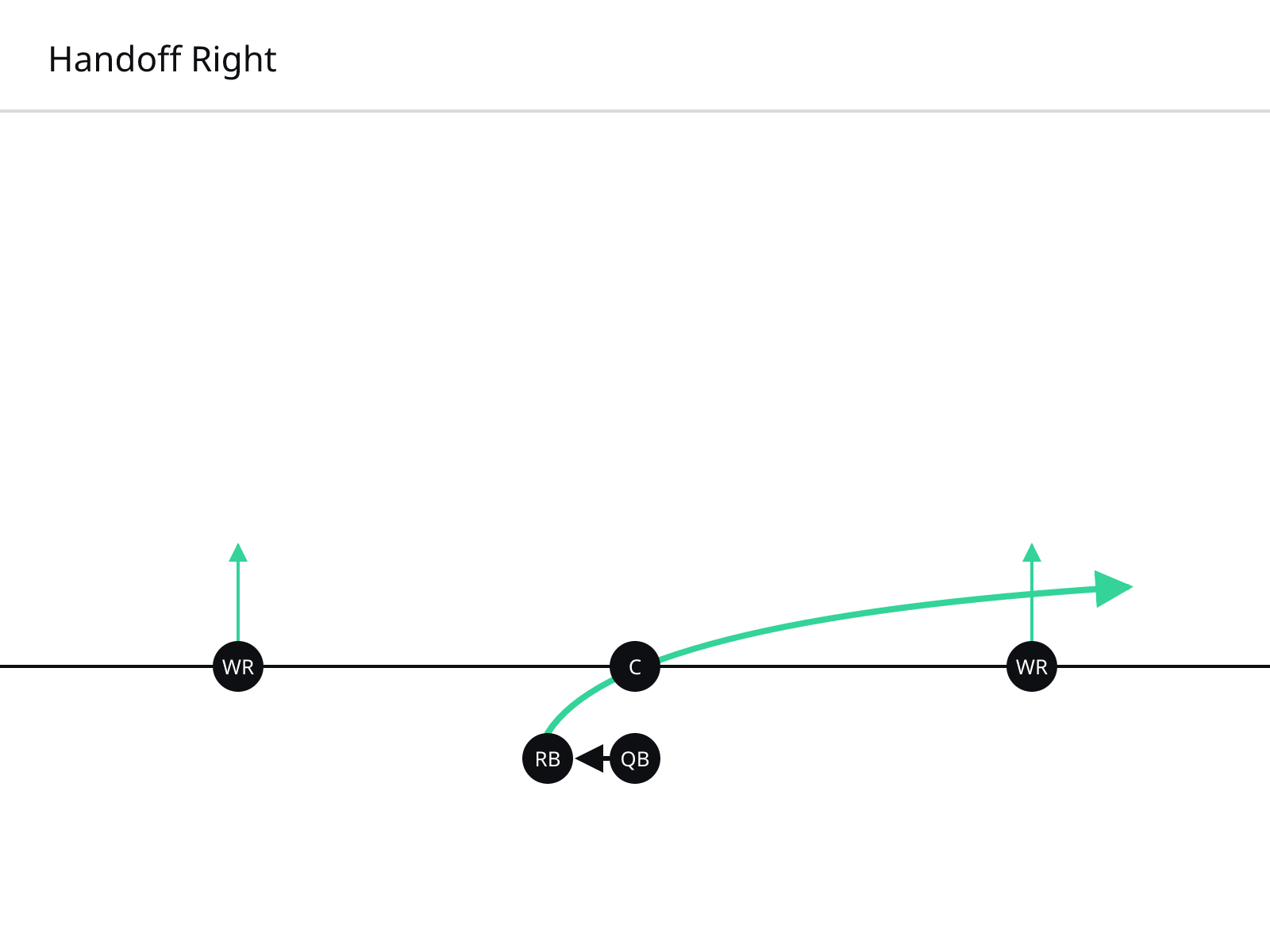
Handoff Right and Handoff Left. The simplest plays in football. The quarterback takes the snap and hands the ball to the running back going right, or going left. No passing required, which matters a lot when throwing and catching are still new. Run these more than anything else.
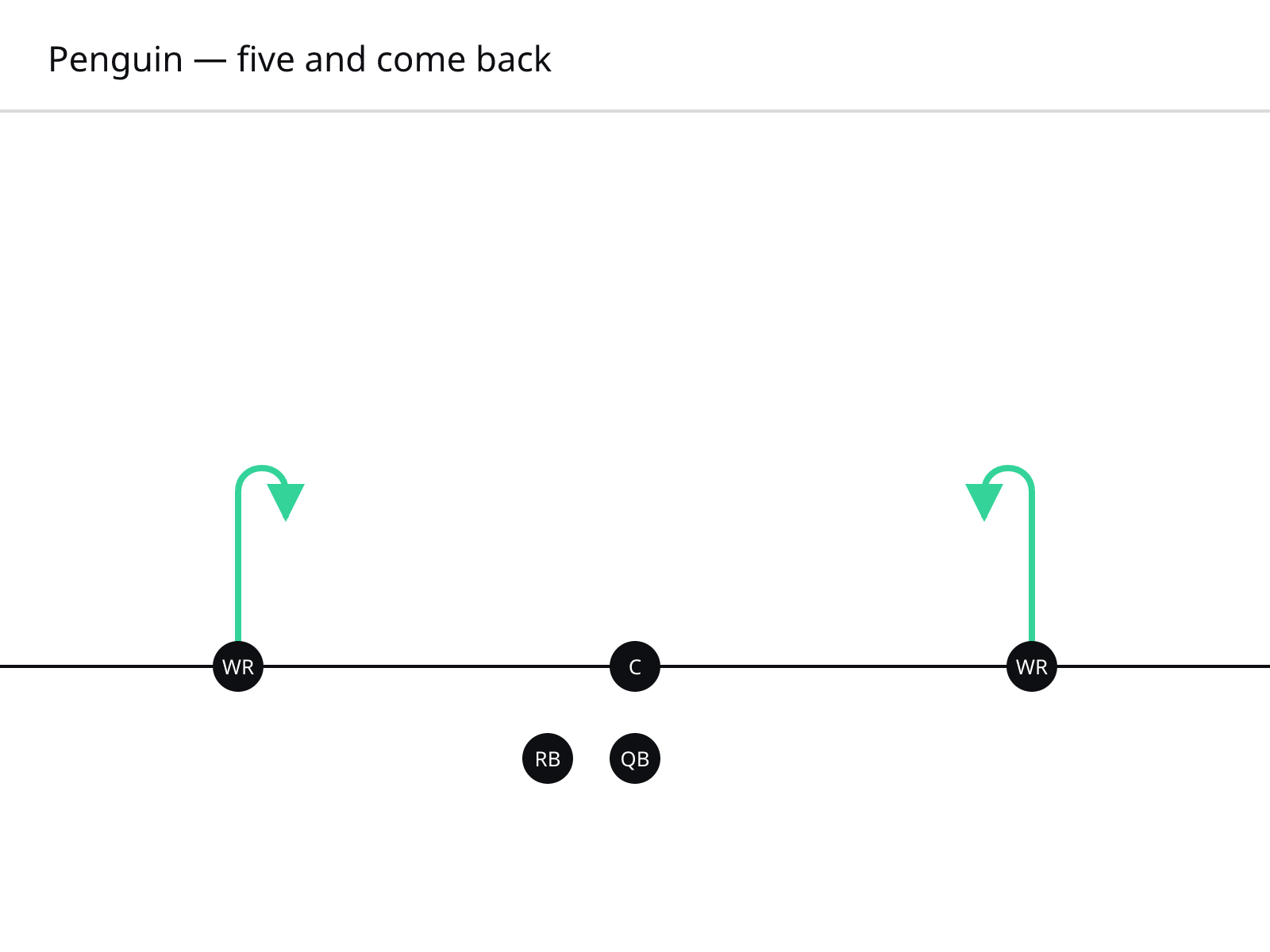
Penguin. The two receivers run out about five yards, then turn around and look for the ball. That is it. A short, safe throw that teaches receivers to come back to the quarterback.
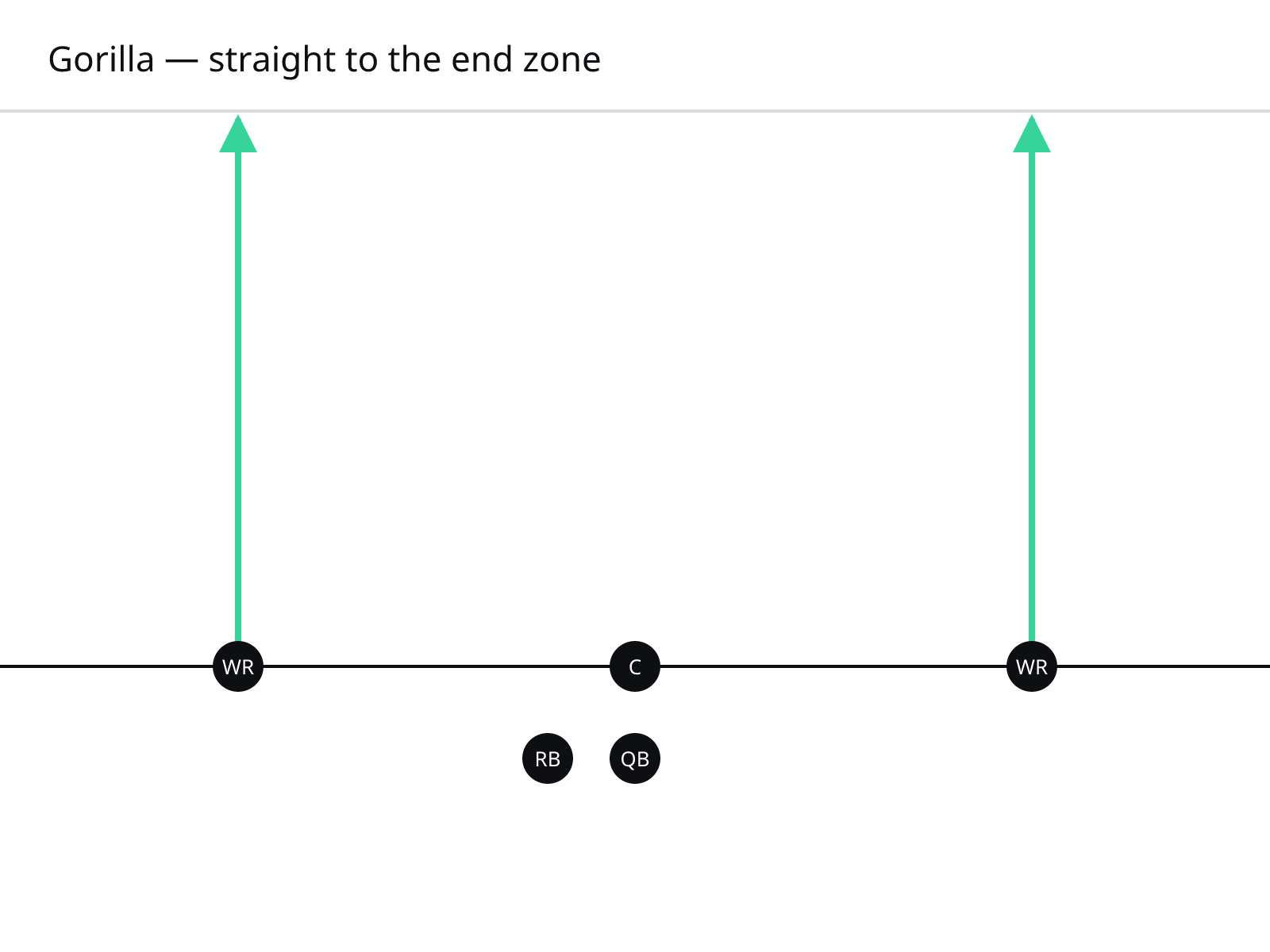
Gorilla. The receivers run straight to the end zone as fast as they can. This is the "just go" play. Sometimes a kid is wide open and the quarterback heaves it. Mostly it teaches receivers to run hard downfield.
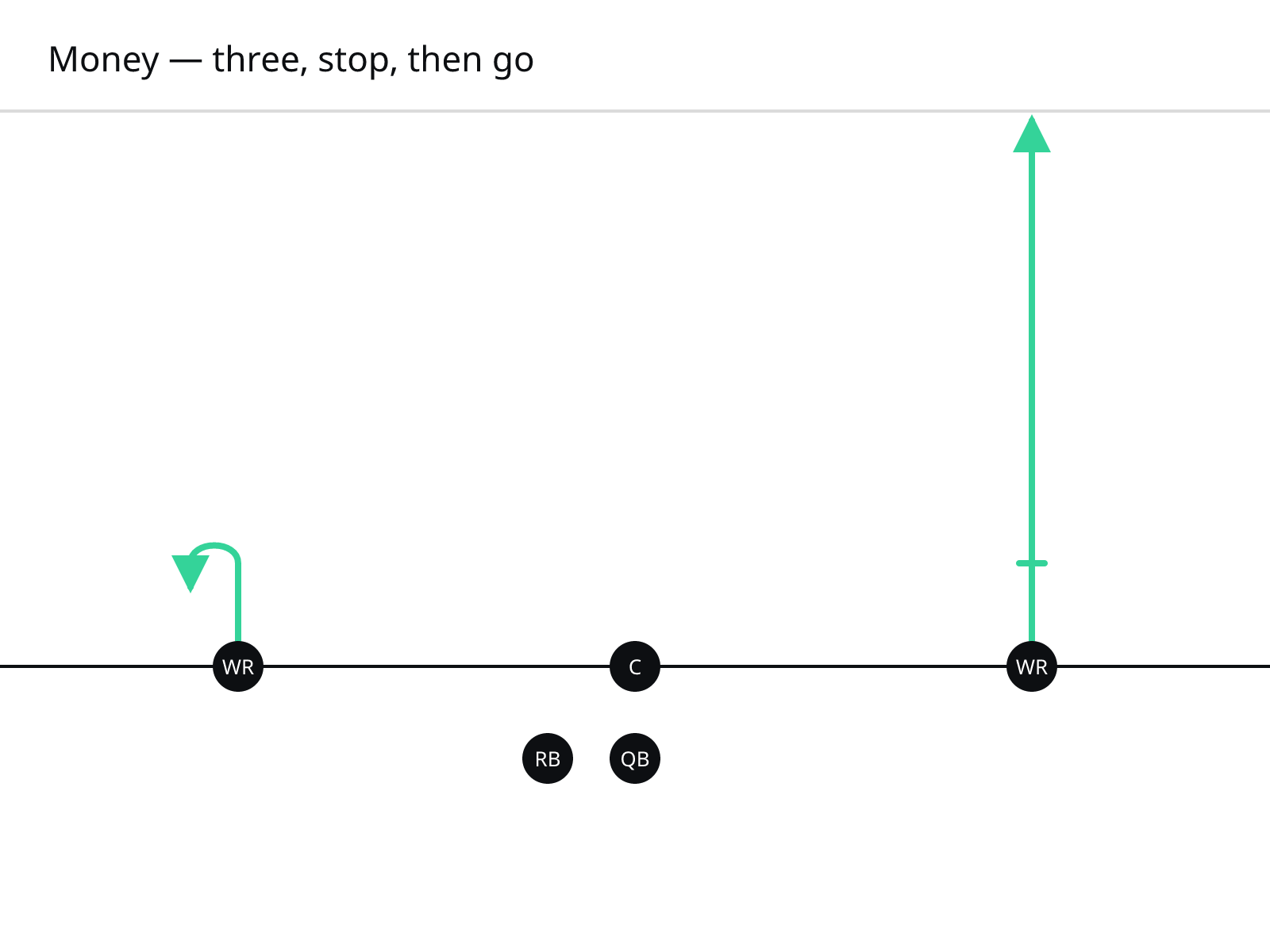
Money. A small step up. The receiver runs about three yards, stops and fakes a catch, then turns and runs toward the end zone. It is a beginner's double move, and it works because young defenders bite on the fake.
Name them so they stick, then repeat
The names are not a gimmick. They are the teaching method. Coaches recommend giving each play a creative name that sticks in a kid's mind, like Banana Left, and avoiding boring names that all sound alike. Penguin, Gorilla, and Money work because no 6 year old confuses a penguin with a gorilla.
Then repeat. For the youngest players, run the same handful of routes over and over. Repetition is how they learn what each play is for. Resist the urge to add a sixth and seventh play. Save the bigger playbook for age 9 and up, and even then, expect chaos. As one of the coaches put it, you give them a play and they end up everywhere. That is normal.
The most important coaching tool at this age is patience.
Defense is even simpler
Do not scheme it. At every youth age, teach flag pulling as its own skill, with players practicing the pull on a moving teammate. For alignment, basic man coverage is plenty. Everyone guards a person. Zone and blitzing can wait for older divisions. If your players can pull a flag and stay with the kid in front of them, you are ahead.
What to track at this age
Skip the box score math. Completion percentage means nothing for a team still learning to catch. What matters at 5 to 7 is touches and effort. Did every kid get a carry or a catch? Did they get a flag pull? Is anyone getting left out of the action?
That is where a stat tracker actually helps a young team, not for analytics, but for fairness and for parents. StatHawk lets you log carries, catches, and flag pulls with a tap, so it is easy to make sure the ball spreads around and every kid does something. Parents can follow the game live from their phone and see the moment their kid pulled a flag or caught a pass. For this age, that is the stat that counts. The core features are free.
Keep the playbook small, the names fun, and the ball moving. That is the whole game at 5 to 7.
You can download StatHawk free on the App Store and have it set up before your next practice.
Sources: USA Football Football Development Model (fdm.usafootball.com); MOJO Sports, "5 Easy Flag Football Plays for Beginners" and "How to Coach Flag Football"; Striveon flag football practice plan; Broncos Flag Football, teaching fundamentals. Play names and descriptions credited to coaches Art Moreno (Blue Chip Youth Sports) and Damon Blechen (Next Level Flag Football) via MOJO Sports.
Track your team with StatHawk
StatHawk is the free iOS app built for flag football coaches. Score games live, build full box scores, and share a public GameView link that parents and fans can open in a browser without an account or app download. Want deeper Insights and AI Season Summaries? See StatHawk Pro. Coaches can download StatHawk free on the App Store.