
Flag Football Plays for 11 to 14 Year Olds (Route Combinations)
This is the age where flag football starts to look like football. By 11 to 14, your players can run a real route tree, hold a play call in their head, and stay disciplined for a full play. So the offense changes in one important way. Plays stop being "everyone run a route and hope" and start being designed to put a specific defender in a bind, with a quarterback who actually reads that defender.
That is the jump from the younger tiers. At 8 to 10 you teach a primary target and a checkdown. At 11 to 14 you teach combinations that scheme a receiver open and a quarterback who works a short progression to find him. Here is how to build it.
Give them a real play-calling system
Middle-school-aged players can handle a system now. A numbered passing tree, where each route has a number and you call combinations by combining numbers, works well at this age. Coaches who use it report calling a wheel route as a "19," an out then a streak, or a post-corner as an "87." Pair that with a few formations, usually twins and trips, and you can call a full play in a few words. A trips set adds a middle receiver and a lot of options.
Younger kids need "Marcus, you run to the right." Middle schoolers can learn "Trips Left, 249." Use that. It speeds up your huddle and it makes the kids think.
Build the offense on route combinations
The core idea at this age is the route combination: pairing routes so a defender cannot cover both, which opens a throwing window. These are the concepts to install.
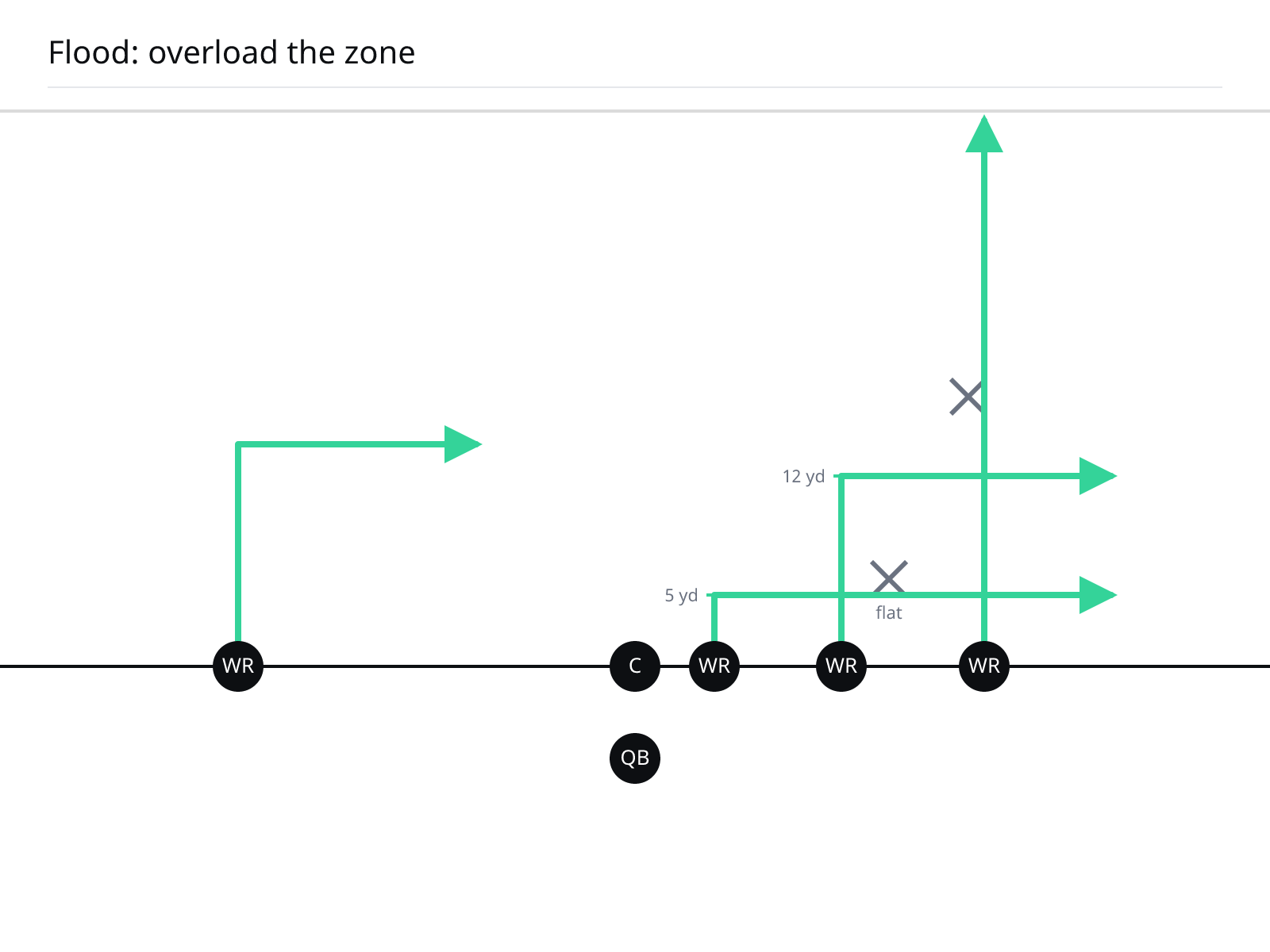
Flood (vertical stretch). Send three routes to the same side at three depths: a deep post or go, an intermediate out or dig, and a short flat. A zone defender cannot cover all three levels, so he has to choose, and the quarterback throws to the level he leaves open. This is the cleanest progression read at this age.
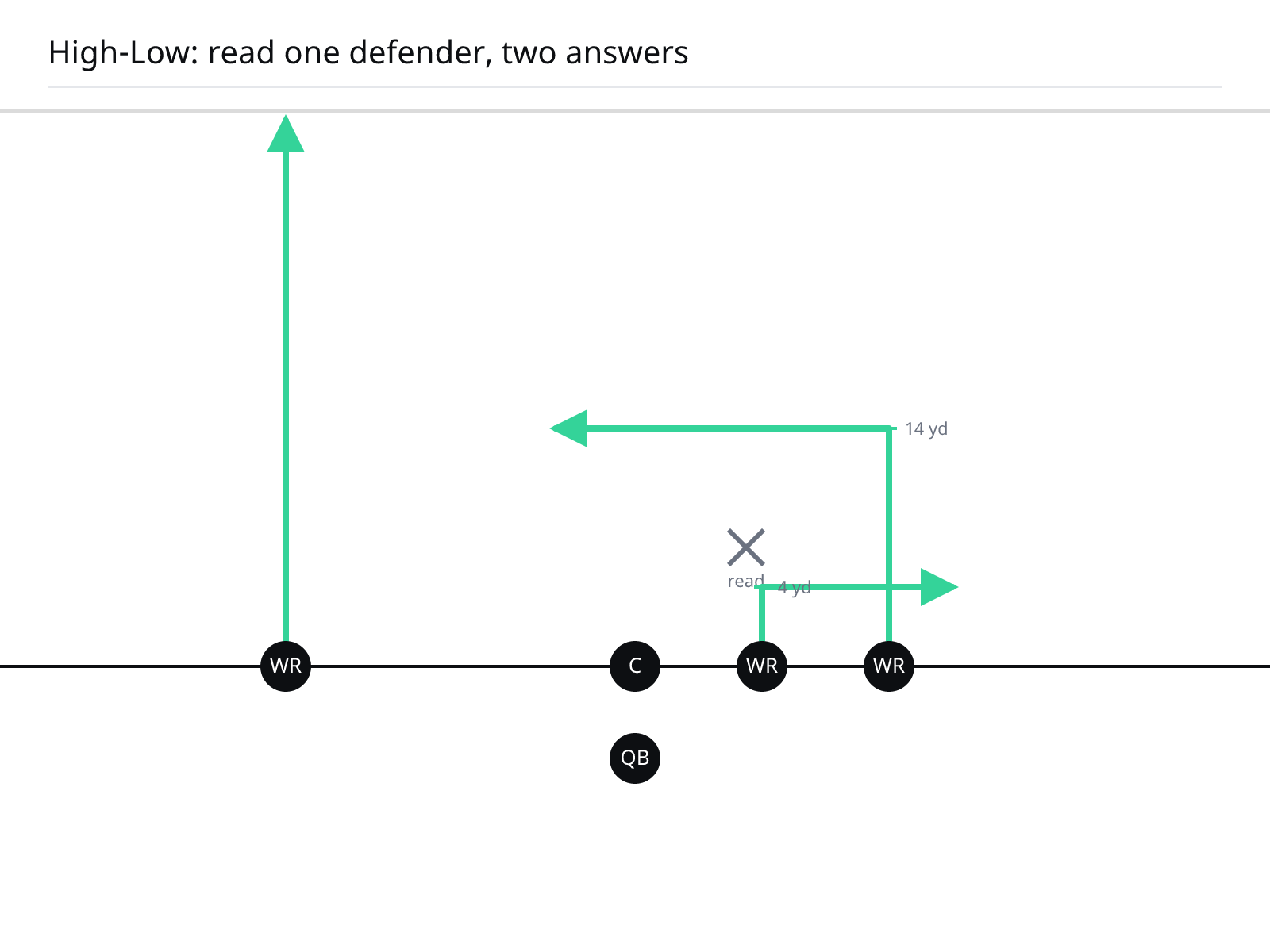
High-low. Two routes at two depths over the same defender, a deep dig and a shallow cross underneath. The quarterback reads that one defender. If he drops, throw underneath. If he sits, throw over the top. One read, two answers.
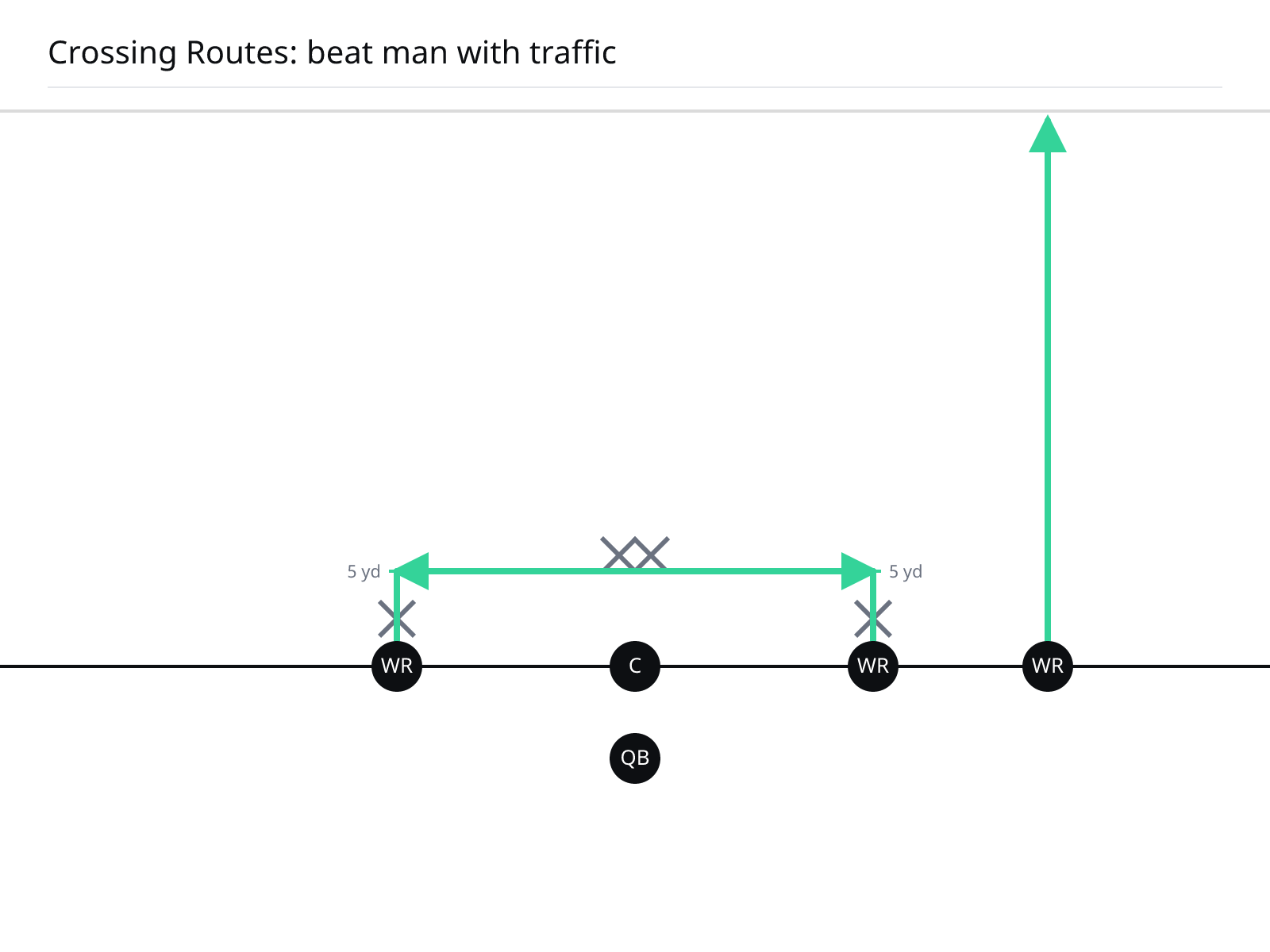
Crossing routes versus man. Two receivers cross to create a natural pick. Against the man coverage you see most at this age, the rub springs someone open. It is the same idea as the younger crossing-slants play, just run at speed with real spacing.
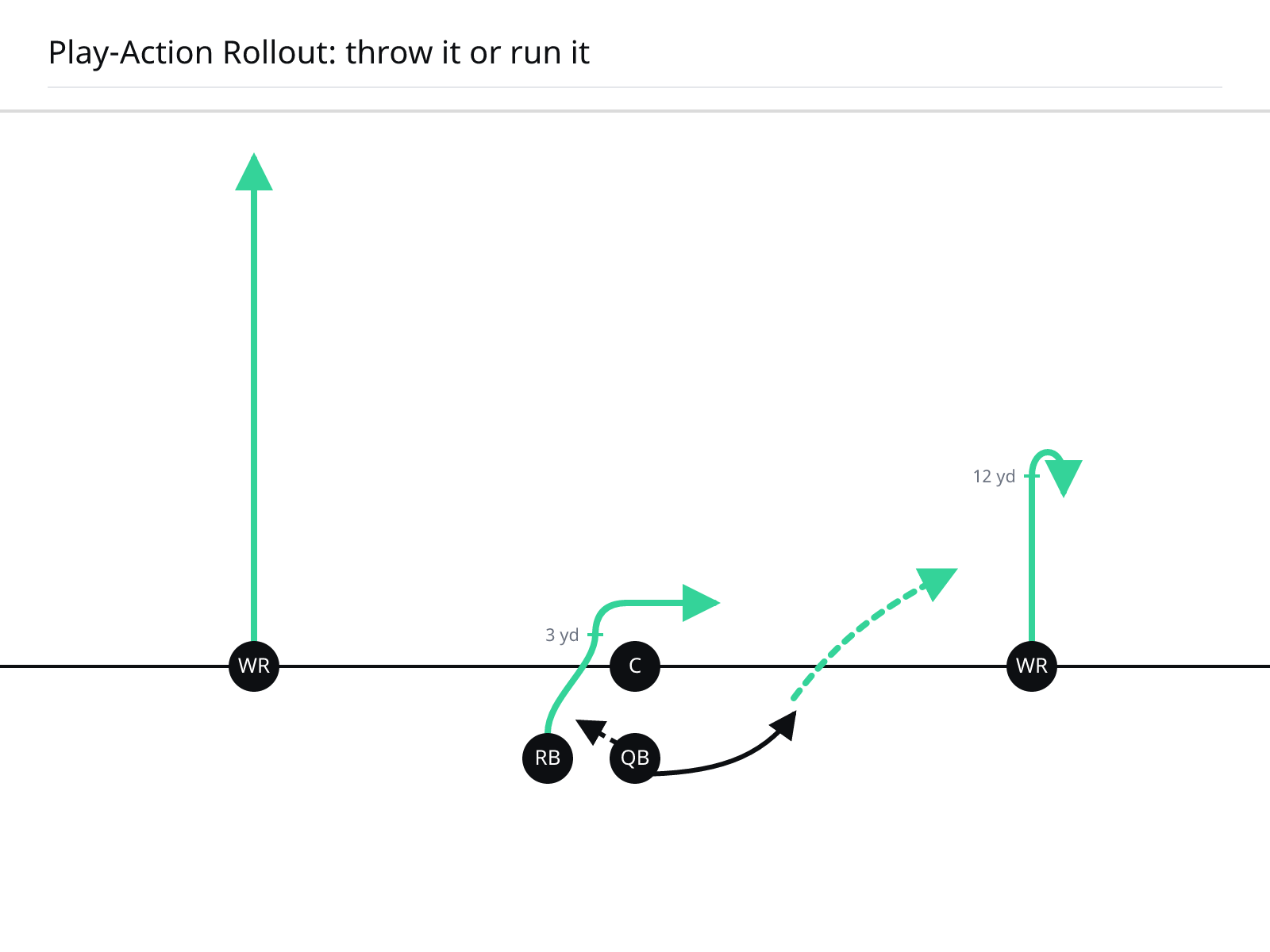
Play-action rollout with an option. Fake the handoff, roll the quarterback out, and give two reads on the move: a receiver who sells a deep route then comes back, and a back on a whip or bubble underneath. Tell the quarterback to throw if someone is open and run if there is green grass. That run-or-throw choice is the first taste of true option football.
The quarterback's job changes
This is the tier where the quarterback starts reading. Teach them to recognize man versus zone before the snap, and to work a progression if the first read is covered. The simplest manipulation to teach: against man, find a fast receiver matched on a slower defender and attack it with a slant or a go. Teach them to slide in and out of the pocket to buy time, not to bail at the first sign of a rusher.
You can also introduce simple audibles. A coach does not need a 13 year old reading like a pro, but switching one receiver off a deep route to a hook when the defense lines up deep, or letting the quarterback call one receiver's route at the line, gets them thinking instead of just running what they heard.
Defense adds a layer
Man coverage still wins a lot at this age, so keep drilling it. But this is the tier to introduce a basic zone, and more importantly to teach your players to recognize which one they are facing. The same skill that helps your offense attack a coverage helps your defense disguise one.
A note on format
Most 11 to 14 flag is still 5v5, often from trips and twins sets. At the top of this band, some players move into 7v7. The good news is that everything above carries over. Flood, high-low, and crossing concepts are the same in 7v7, just with more bodies and a wider field.
What to track
Now the stats earn their keep. At this age, yards per attempt, completion percentage by play type, and a quarterback's decision-making are real coaching signals. You can see whether a concept actually works against the defenses you face, and whether your quarterback is making the right read or forcing the first one.
StatHawk records each play as you score it, so after the game you have a play-by-play log and per-player passing, rushing, and receiving lines to review. StatHawk does not grade reads or routes. That judgment stays with the coach. Live scoring and box scores are free, and the deeper analytics are part of StatHawk Pro.
Give them a system, build on combinations, and teach one read at a time. That is how an 8 to 10 offense grows into a real one.
Download StatHawk free on the App Store →
Sources: USA Football Football Development Model (fdm.usafootball.com); Jersey Watch, "How to Call Youth Flag Football Plays"; Flag Football Academy, "Youth Flag Football Passing Tree"; Little Legends Football, "Route Combinations in Football"; Broncos Flag Football play-calling guide; Regina Youth Flag Football 5-a-side playbook.
Track your team with StatHawk
StatHawk is the free iOS app built for flag football coaches. Score games live, build full box scores, and share a public GameView link that parents and fans can open in a browser without an account or app download. Want deeper Insights and AI Season Summaries? See StatHawk Pro. Coaches can download StatHawk free on the App Store.