
7v7 Flag Football Plays: Concepts & Coverage Reads for High School
This is the top of the ladder. By high school, and in most 7v7 leagues, flag football is a real passing offense. Your players can run a full route tree, hold a multi-route concept in their heads, and read a defense. So the offense is no longer about teaching kids where to stand. It is about putting defenders in conflict and reading them.
The mistake good teams avoid is running too much. 7v7 is complex enough that coaches feel pressure to build 30-play playbooks. The teams that win usually run 10 to 12 plays they know perfectly, with each play carrying a built-in answer to a specific coverage. The goal at this level is a tight, deep, well-understood package, not a thick one. Here is how to build it, for both sides of the ball.
The core principle: an answer for every coverage
Defenses at this level play a mix of man and zone, and they disguise it, showing one look pre-snap and playing another after. So your concepts need answers for both. A reliable way to build a play is to pair a man-beater on one side with a zone-beater on the other, so you always have somewhere to go no matter what the defense actually plays. Then teach your quarterback to identify the base defense within the first two or three plays and attack it systematically the rest of the game.
A few formation notes for 7v7: trips, empty, bunch, and stacks are your friends because they create natural traffic and force the defense to declare. And do not forget the snapper. Defenses often cover the center with their slowest player, which makes the snapper-into-the-flat a matchup worth exposing.
The concepts to install
These are the proven 7v7 concepts. Each beats something specific.
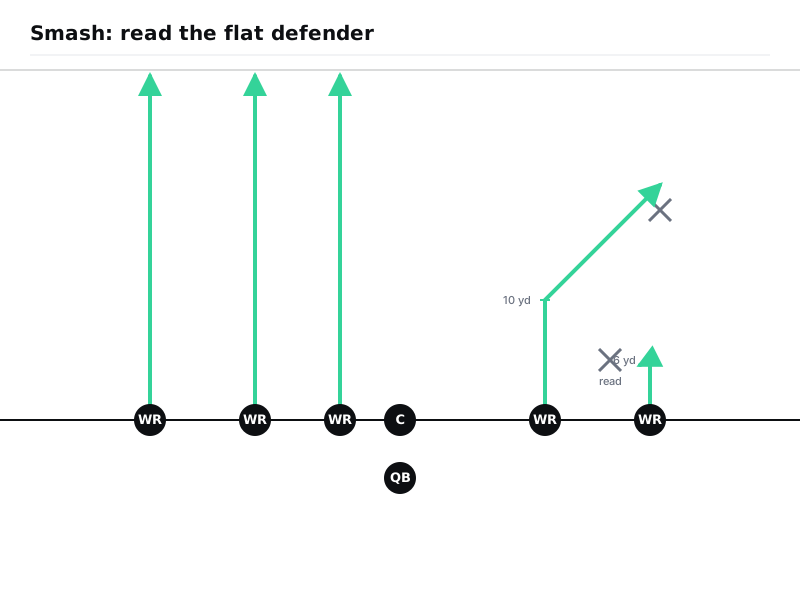
Smash. A corner route over a hitch on the same side. Against zone, you throw where the flat defender is not. If he sinks to the corner, throw the hitch underneath. If he jumps the hitch, throw the corner over the top. It is the cleanest high-low read in the game.
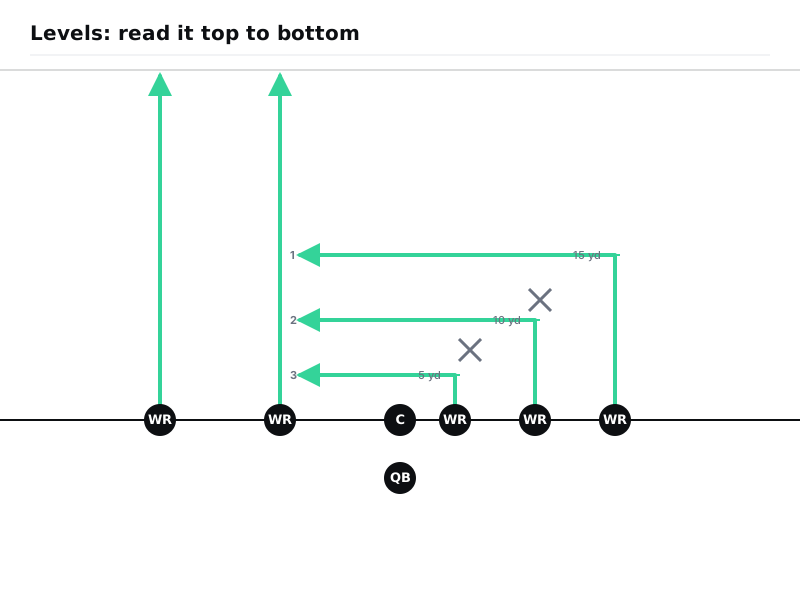
Levels. Three receivers at three depths on the same side. The quarterback reads top to bottom and throws to the open level. It is the most reliable progression concept in 7v7.
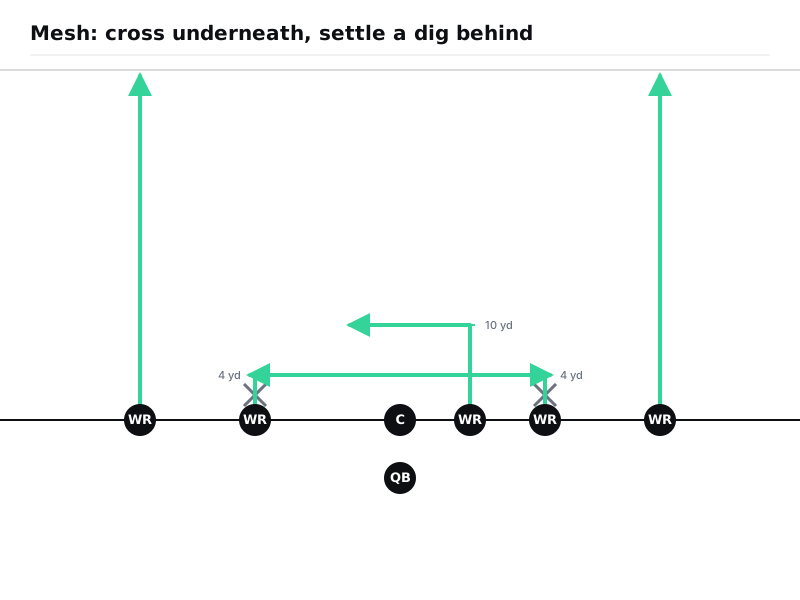
Mesh and Drive. Two shallow crossers running opposite directions, with receivers on the move. These are the answer to the man coverage you will see constantly, because moving receivers are hard to cover man-to-man and they stay right in the quarterback's vision.
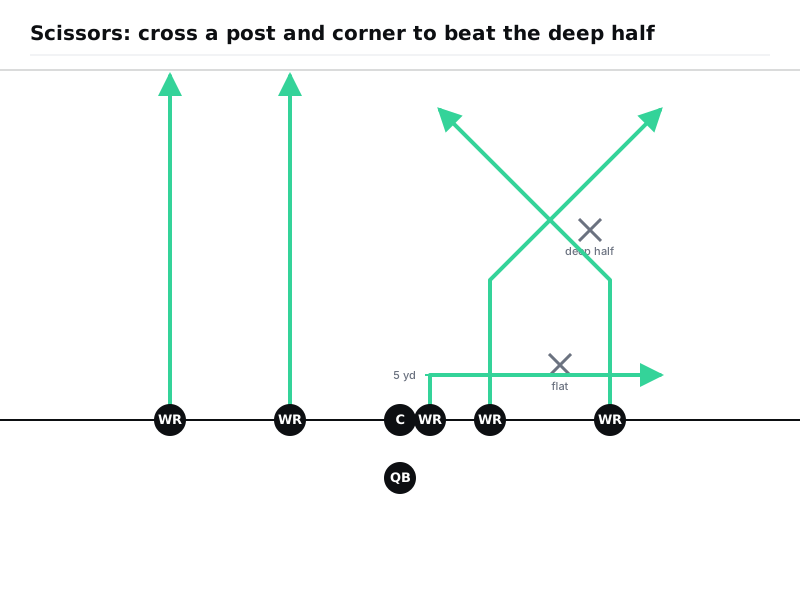
Flood and Post-Corner (Scissors). Overload a zone vertically or horizontally so a defender has to choose. The Post-Corner, with two receivers crossing their deep breaks, is one of the best Cover 2 beaters there is.
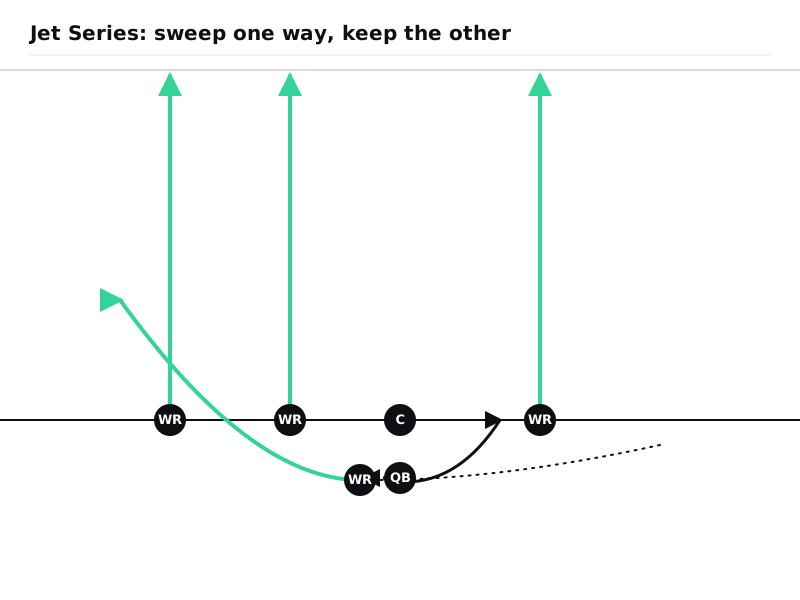
Jet series. Motion a receiver across on a jet sweep to get an athlete the ball in space. Once the defense overplays the sweep, hit them with a QB keep or counter off the same motion. This is how you punish a defense that flows hard to your motion.
The quarterback reads coverage now
This is the tier where the quarterback truly reads. Teach them to recognize the common shells: Cover 1, Cover 2 man, Cover 2 zone, Cover 3, Cover 4. The fastest pre-snap tool is motion. Send a receiver in motion and watch the defense. If a defender follows him across, it is man. If the defense passes him off, it is zone. That one read tells your quarterback which side of the concept to work.
For an athletic quarterback, and girls high school flag is full of them, get them moving. Boot and orbit action off a jet or sweep look, in the style of an NFL bootleg, buys time and gives a moving launch point. Just be sure to pair it with a play where you actually hand the ball off on the motion, or the defense stops respecting it.
This is a jump from the 11 to 14 tier, where the quarterback was learning to work a short progression. At 15+, the read starts before the snap.
Defense: man is the workhorse, zone is the upgrade
On defense, man coverage is still the foundation, and 7v7 is where you finally have the numbers to add real zone. A common approach is a Cover 3 base with Cover 2 mixed in. The key is disguise. Line up the same way every play and only rotate into your true coverage at the snap, so the quarterback cannot get comfortable. Good 7v7 defenses go further and run a two-deep and a four-deep look that appear identical pre-snap, blended with man, and they hide which defender is rushing the quarterback. A four-deep call says keep everything in front and rally to the catch. A two-deep call says contest the underneath routes. Same picture, different answer.
What to track at this level
This is where stats stop being a nicety and start driving game plans. At the high school and 7v7 level, completion percentage by concept, yards per attempt, success rate by play type, and play-calling tendencies are the difference between guessing and knowing. If your Smash concept hits 70 percent against the teams you face and your deep shots hit 20 percent, that should change what you call on third down.
StatHawk tracks all of it live and turns it into a quarterback dashboard, a play-by-play log, and drive efficiency you can break down after the game. The deeper coaching analytics, including play-calling tendencies and success rate by play type, are part of StatHawk Pro. The core live tracking, box scores, and parent sharing are free. For a program chasing a state title or sending players to college flag, that data is part of the job now.
Keep the package tight, give every play a coverage answer, and read one defender at a time. That is championship 7v7.
Download StatHawk free on the App Store →
Sources: FlagSketch, "7v7 Flag Football Plays and Formations Guide"; FirstDown PlayBook 7v7 concepts and defensive disguise articles; Youth Football Online, "7v7 Flag Football Coverage Beaters" and "7 on 7 Football Playbook"; Best Flag Football Plays (Cover 2 and Cover 3); 7on7 15U-18U defensive playsheets.
Guides in plays & routes
Track your team with StatHawk
StatHawk is the free iOS app built for flag football coaches. Score games live, build full box scores, and share a public GameView link that parents and fans can open in a browser without an account or app download. Want deeper Insights and AI Season Summaries? See StatHawk Pro. Coaches can download StatHawk free on the App Store.